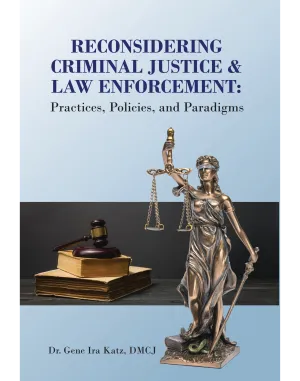
Reconsidering Criminal Justice and Law Enforcement: Practices, Policies, and Paradigms
Author(s): Gene Ira Katz
Summary:
Reconsidering Criminal Justice & Law Enforcement: Practices, Policies & Paradigms is a collection of evidence-based research offering a wide-ranging exploration of current and historical trends driving America’s predominant practices and policies in criminal justice and law enforcement, along with their cultural and legislative foundations. In addition to offering reasoned, practicable, and fair-minded options for addressing the legal system’s persistent struggles with fairness and equality, this book provides numerous proven solutions for significantly improving police-community relations and a variety of other positive outcomes.
For a better idea of the range of topics covered, here are some chapter titles, followed by a few select excerpts from the book:
More Effective Police Community Relations Through Media, Personal Engagement, and Collaborative Events
Law Enforcement Management Concepts for Enhancing Diversity
The Expanding Militarization of US Law Enforcement
Police Use of Force
The Status of Women in American Policing
Ethical Issues in Managing Law Enforcement Agencies
More Effective Trends in Law Enforcement Training
How Race, Social Class, or Common Stereotypes May Influence Officer Decision Making
False Convictions in Death Penalty Cases
The US and the International Criminal Court
Legislative Responses to Sex Crimes
How Race, Social Class, or Common Stereotypes May Influence Officer Decision Making
Simple Self-Care Methods for Law Enforcement Personnel to Address Anxiety, Stress, Depression and PTSD
... and more
SELECTED EXCERPTS FROM THE BOOK:
Law enforcement agencies fulfill a fundamental role in our society, and in many communities, individual police officers are often the public face of local government. It is therefore critical that our nation's law enforcement agencies broadly reflect the diversity of the communities they serve.
<><><>
Over the past half-century, under the auspices of the federal government, most of the 15,000-plus police forces across the United States have increasingly acquired military-grade weaponry, equipment, and personal armor. In addition, especially following the terrorist attacks of 9/11, many of law enforcement agencies have embraced combat-style training, while also establishing specialized squads that enforce the law as though they were soldiers on an assault mission.
<><><>
Community Policing has been hailed as “democracy in action,” as it requires active sharing of responsibility through collaboration between local government, civic and business leaders...and everyone else who is concerned for safeguarding the welfare of the greater community.
Reconsidering Criminal Justice & Law Enforcement: Practices, Policies & Paradigms is a collection of evidence-based research offering a wide-ranging exploration of current and historical trends driving America’s predominant practices and policies in criminal justice and law enforcement, along with their cultural and legislative foundations. In addition to offering reasoned, practicable, and fair-minded options for addressing the legal system’s persistent struggles with fairness and equality, this book provides numerous proven solutions for significantly improving police-community relations and a variety of other positive outcomes.For a better idea of the range of topics covered, here are some chapter titles, followed by a few select excerpts from the book:More Effective Police Community Relations Through Media, Personal Engagement, and Collaborative EventsLaw Enforcement Management Concepts for Enhancing Diversity The Expanding Militarization of US Law Enforcement Police Use of Force The Status of Women in American PolicingEthical Issues in Managing Law Enforcement Agencies More Effective Trends in Law Enforcement Training How Race, Social Class, or Common Stereotypes May Influence Officer Decision Making False Convictions in Death Penalty Cases The US and the International Criminal Court Legislative Responses to Sex Crimes How Race, Social Class, or Common Stereotypes May Influence Officer Decision Making Simple Self-Care Methods for Law Enforcement Personnel to Address Anxiety, Stress, Depression and PTSD ... and moreSELECTED EXCERPTS FROM THE BOOK:Law enforcement agencies fulfill a fundamental role in our society, and in many communities, individual police officers are often the public face of local government. It is therefore critical that our nation's law enforcement agencies broadly reflect the diversity of the communities they serve.<><><> Over the past half-century, under the auspices of the federal government, most of the 15,000-plus police forces across the United States have increasingly acquired military-grade weaponry, equipment, and personal armor. In addition, especially following the terrorist attacks of 9/11, many of law enforcement agencies have embraced combat-style training, while also establishing specialized squads that enforce the law as though they were soldiers on an assault mission.<><><> Community Policing has been hailed as “democracy in action,” as it requires active sharing of responsibility through collaboration between local government, civic and business leaders...and everyone else who is concerned for safeguarding the welfare of the greater community.