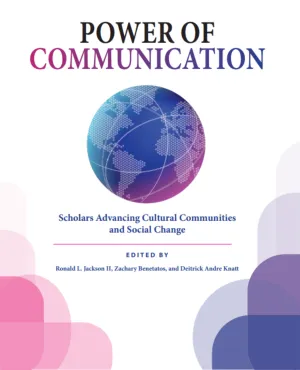
Power of Communication: Scholars Advancing Cultural Communities and Social Change

Author(s)
Ronald Jackson, Zachary Benetatos, Deitrick Andre Knatt Jr.
Edition
1
Pages
206
Book Type
Academic

CHOOSE YOUR FORMAT

Help Me Choose

Paperback Book

$72.00

ISBN: 9798319747044
Details: 
Print Product

eBook

$55.00

ISBN: 9798319747051
Details: 
Electronic Delivery EBOOK - 365 days

CHOOSE YOUR FORMAT

Help Me Choose

Paperback Book

$72.00

ISBN: 9798319747044
Details: 
Print Product

eBook

$55.00

ISBN: 9798319747051
Details: 
Electronic Delivery EBOOK - 365 days

Power of Communication: Scholars Advancing Cultural Communities and Social Change offers a groundbreaking exploration of how cultural theory becomes a catalyst for real world transformation. Bridging scholarship and lived experience, this volume spotlights the visionary thinkers whose work has reshaped communities, challenged inequities, and expanded our understanding of communication as a driver of collective liberation.


This book serves as both an intellectual history and an inspirational blueprint—inviting emerging and established scholars alike to consider how their work can meaningfully transform lives and strengthen the social fabric of the communities they study and serve.

Part I: Identity, Culture & Social Change

1. Molefi Kete Asante

Afrocentricity, Communication, and Cultural Grounding

By Curtis Ladrillo Chamblee

2. Michael Hecht

Identity, Communication Theory, and Community-Centered Intervention

By Helen Rosenboom

3. Kent A. Ono

Critical Rhetoric, Race, and Media Power

By Kaila Palmer

4. Mohan J. Dutta

Culture-Centered Communication and Global Voices from the Margins

By Essien Eyesiere

5. Karin Gwinn Wilkins

Communication, Development, and Global Cultural Politics

By Zachary Benetatos

6. Tina M. Harris

Interracial Discourses, Black Media Representation, and Racial Coping

By Deitrick Knatt

7. Brenda J. Allen

Black Women, Organizational Communication, Identity Politics

By Kalema Meggs

8. John L. Jackson, Jr.

Media ethnography, film representation, and racial identity politics

By Mikayla Renwick

Part II: Intersectional Activism & Social Justice

9. Amber L. Johnson

Community-Engaged Learning, Healing Justice, Pleasure, and Radical Possibility

By Zachary Benetatos

10.Mark Orbe

Race, Interpersonal Discourses, Cultural, Identity, and Co-Cultural Theory

By Mark Hopson

11.Angharad N. Valdivia

Feminism, Global Media, Cultural Citizenship, and Representations of Latina

Identities

By Yulani Rodgers

12.Karma R. Chávez

Rhetoric, Resistance, and Coalition Politics

By Ebonee Brown

13. Reynaldo Anderson

Afrofuturism, African Diaspora Identities, Global Civil Resistance

By Deitrick Knatt

14.Robin Boylorn

Narratives of Black women’s empowerment, Black girlism, self-care, identity

politics

By Kyle Walkine

15. Yea-Wen Chen

Identity Politics, Social Marginality, and Intercultural Dialogue

By Hongzhu Jin

16. Karen Ashcraft

Social Difference, Academic Labor, and Organizational Politics

By Charlotte Wise

17.Why Social Justice Matters: A Conversation about the value of social change

scholarship

By Ronald L. Jackson II

Ronald Jackson

Ronald L. Jackson II is Professor & Chair of Communication Studies and Professor of Journalism & Media Management at University of Miami. A Past President of the National Communication Association and the Eastern Communication Association, he is an internationally recognized scholar whose work has profoundly shaped the study of communication, identity, and culture. Across more than three decades, his scholarship has advanced critical-cultural approaches to communication through publication of 20 books and over 125 scholarly publications. It is why he has been selected as an International Communication Association Fellow and a National Communication Association Distinguished Scholar. He is widely known for developing Cultural Contracts Theory, a framework for understanding cultural identity negotiation, as well as the Black Masculine Identity Theory.  He has introduced a new construct he has coined Message Imprints, which is discussed in his TedTalk on What Memories Teach Us About Love.

Zachary Benetatos

Zachary Benetatos is a Ph.D. student in Communication at the University of Miami, where his research examines how individuals navigate connection, agency, and resilience in an increasingly AI-mediated world. Drawing on experimental methods, his work investigates the ways AI communication styles shape how people think, feel, and make decisions in emotionally significant and high-stakes contexts, with implications for both scholars and practitioners. He is also the founder of Unscripted, a communication training organization built around experiential learning and leadership development, and a co-founder of transformative global retreats designed to reconnect individuals with themselves, others, and their environment. 

Deitrick Andre Knatt Jr.

Deitrick Knatt is a researcher, editor, and cultural creative professional whose work examines communication, culture, identity, and community formation. His research engages questions of Black life, social justice, displacement, cultural memory, and the role of communication in shaping more equitable futures. Drawing from interdisciplinary traditions in communication, Africana studies, and cultural studies, his work explores how communities create, sustain, and imagine alternative forms of belonging, collective care, and social transformation. Through scholarship, editorial leadership, and cultural programming initiatives, Knatt is committed to fostering dialogue, preserving cultural knowledge, and connecting academic inquiry with community engagement and public impact.

Power of Communication: Scholars Advancing Cultural Communities and Social Change offers a groundbreaking exploration of how cultural theory becomes a catalyst for real world transformation. Bridging scholarship and lived experience, this volume spotlights the visionary thinkers whose work has reshaped communities, challenged inequities, and expanded our understanding of communication as a driver of collective liberation.


This book serves as both an intellectual history and an inspirational blueprint—inviting emerging and established scholars alike to consider how their work can meaningfully transform lives and strengthen the social fabric of the communities they study and serve.

Part I: Identity, Culture & Social Change

1. Molefi Kete Asante

Afrocentricity, Communication, and Cultural Grounding

By Curtis Ladrillo Chamblee

2. Michael Hecht

Identity, Communication Theory, and Community-Centered Intervention

By Helen Rosenboom

3. Kent A. Ono

Critical Rhetoric, Race, and Media Power

By Kaila Palmer

4. Mohan J. Dutta

Culture-Centered Communication and Global Voices from the Margins

By Essien Eyesiere

5. Karin Gwinn Wilkins

Communication, Development, and Global Cultural Politics

By Zachary Benetatos

6. Tina M. Harris

Interracial Discourses, Black Media Representation, and Racial Coping

By Deitrick Knatt

7. Brenda J. Allen

Black Women, Organizational Communication, Identity Politics

By Kalema Meggs

8. John L. Jackson, Jr.

Media ethnography, film representation, and racial identity politics

By Mikayla Renwick

Part II: Intersectional Activism & Social Justice

9. Amber L. Johnson

Community-Engaged Learning, Healing Justice, Pleasure, and Radical Possibility

By Zachary Benetatos

10.Mark Orbe

Race, Interpersonal Discourses, Cultural, Identity, and Co-Cultural Theory

By Mark Hopson

11.Angharad N. Valdivia

Feminism, Global Media, Cultural Citizenship, and Representations of Latina

Identities

By Yulani Rodgers

12.Karma R. Chávez

Rhetoric, Resistance, and Coalition Politics

By Ebonee Brown

13. Reynaldo Anderson

Afrofuturism, African Diaspora Identities, Global Civil Resistance

By Deitrick Knatt

14.Robin Boylorn

Narratives of Black women’s empowerment, Black girlism, self-care, identity

politics

By Kyle Walkine

15. Yea-Wen Chen

Identity Politics, Social Marginality, and Intercultural Dialogue

By Hongzhu Jin

16. Karen Ashcraft

Social Difference, Academic Labor, and Organizational Politics

By Charlotte Wise

17.Why Social Justice Matters: A Conversation about the value of social change

scholarship

By Ronald L. Jackson II
Ronald Jackson

Ronald L. Jackson II is Professor & Chair of Communication Studies and Professor of Journalism & Media Management at University of Miami. A Past President of the National Communication Association and the Eastern Communication Association, he is an internationally recognized scholar whose work has profoundly shaped the study of communication, identity, and culture. Across more than three decades, his scholarship has advanced critical-cultural approaches to communication through publication of 20 books and over 125 scholarly publications. It is why he has been selected as an International Communication Association Fellow and a National Communication Association Distinguished Scholar. He is widely known for developing Cultural Contracts Theory, a framework for understanding cultural identity negotiation, as well as the Black Masculine Identity Theory.  He has introduced a new construct he has coined Message Imprints, which is discussed in his TedTalk on What Memories Teach Us About Love.

Zachary Benetatos

Zachary Benetatos is a Ph.D. student in Communication at the University of Miami, where his research examines how individuals navigate connection, agency, and resilience in an increasingly AI-mediated world. Drawing on experimental methods, his work investigates the ways AI communication styles shape how people think, feel, and make decisions in emotionally significant and high-stakes contexts, with implications for both scholars and practitioners. He is also the founder of Unscripted, a communication training organization built around experiential learning and leadership development, and a co-founder of transformative global retreats designed to reconnect individuals with themselves, others, and their environment. 

Deitrick Andre Knatt Jr.

Deitrick Knatt is a researcher, editor, and cultural creative professional whose work examines communication, culture, identity, and community formation. His research engages questions of Black life, social justice, displacement, cultural memory, and the role of communication in shaping more equitable futures. Drawing from interdisciplinary traditions in communication, Africana studies, and cultural studies, his work explores how communities create, sustain, and imagine alternative forms of belonging, collective care, and social transformation. Through scholarship, editorial leadership, and cultural programming initiatives, Knatt is committed to fostering dialogue, preserving cultural knowledge, and connecting academic inquiry with community engagement and public impact.

Other Titles from this Author(s)

No other titles found of this author