Making a Difference: Ripples of Hope and Courage Across Generations

Author(s)
Kristine Hoover, Carla Olman Peperzak
Edition
1
Pages
102
Book Type
Retail

CHOOSE YOUR FORMAT

Help Me Choose

Paperback Book

$10.00

ISBN: 9798319715265
Details: 
Print Product

eBook

$5.00

ISBN: 9798319715272
Details: 
Electronic Delivery EBOOK - 365 days

CHOOSE YOUR FORMAT

Help Me Choose

Paperback Book

$10.00

ISBN: 9798319715265
Details: 
Print Product

eBook

$5.00

ISBN: 9798319715272
Details: 
Electronic Delivery EBOOK - 365 days

When one person chooses courage over fear, the world changes –one act, one life, one ripple at a time.

Making a Difference celebrates the life and legacy of Carla Peperzak, a Holocaust survivor and rescuer whose bravery continues to inspire new generations. Carla Peperzak was just a teenager when she chose to stand up for what was right –helping others, speaking out against injustice, and showing that even one voice can make a difference.

In this collection, middle and high school students along with community members share their thank-you notes, drawings, and reflections –heartfelt responses to Carla’s story of compassion and moral courage. Their words and art remind us that courage is contagious, hope is powerful, and that each of us can be the light of our own time and place.

Through their words and art, these voices young and old remind us that the power to stand up, speak out, and care deeply lives within each of us. This collection can be read on its own or as a companion to the documentary Carla the Rescuer. Together, with Carla’s other books, My Journey and Keys of My Life, these materials celebrate the lasting impact of one woman’s bravery and the next generation’s promise to carry her light forward.

Because of Carla, hope grows. Courage multiplies. And the next generation learns that one life truly can make a difference.

Kristine Hoover

Dr. Kristine F. Hoover is Professor at Gonzaga University in the Master of Arts in Organizational Leadership program, facilitating the Change Leadership concentration, and directs the university’s Institute of Hate Studies. The Institute bridges the academy with community engagement, through research, teaching and partnerships with students, staff, faculty, and community members. She is a former Chair of the Washington Legislative Ethics Board and former Society for Human Resource Management (SHRM) trainer. Dr. Hoover is concerned with questions regarding how organizations and communities shape inclusion and cultures of dignity.   

Carla Olman Peperzak

A Holocaust survivor who has lived in Spokane, WA since 2004, Carla Peperzak risked her life to help others as a member of the Resistance while living under Nazi occupation in Holland. Carla was born in Holland in 1923. She grew up in Amsterdam with her family, which was close-knit and fairly well-to-do. Her father was Jewish, and her mother was born Catholic, but raised in a Jewish family when her parents died. Carla's comfortable, normal childhood included vacations on the coast, field hockey, rowing, ice skating and sailing. She loved school and dreamed of one day becoming a doctor. Carla's family also lived very near Anne Frank and her family and attended the same Reform temple.

When the Nazis invaded Holland in 1940, everything changed. The following year, Jews had to register with the German authorities. Carla was required to have an ID card with a large "J" on it. In 1942 the Nazis went a step further and forced all Dutch Jews to wear the Star of David on their clothes. Carla's father, however, acquired papers from a lawyer that identified Carla, her sister, and her mother all as non-Jewish, allowing them greater freedom.

Carla was able to enroll in a medical technology program, and while working in a hospital she stole a German ID and bought a German nurse's uniform. With this disguise, she became active in the Resistance. Her first job, in 1942, was to find a place for her uncle and his family to hide in the countryside. She was able to do the same for about forty other people, and helped them obtain food, medical supplies, and fake IDS. Carla often biked for hours to visit those hiding outside the city.

Although her immediate family survived, about seventy-five percent of Carla's extended family was killed in the Holocaust. After the war, Carla married her husband Paul, who was Catholic. In 1948 they left Holland, and they and their four children lived on four different continents because of Paul's work with the United Nations and the World Bank. She and Paul eventually settled in the U.S. and became citizens in 1958.

Carla has been sharing her story with students and the community members since 1992 and continues to inspire all of us with her bravery, kindness and spirit.

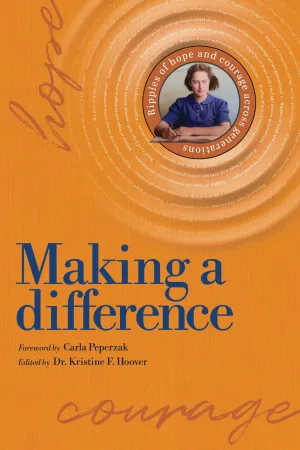
When one person chooses courage over fear, the world changes –one act, one life, one ripple at a time.

Making a Difference celebrates the life and legacy of Carla Peperzak, a Holocaust survivor and rescuer whose bravery continues to inspire new generations. Carla Peperzak was just a teenager when she chose to stand up for what was right –helping others, speaking out against injustice, and showing that even one voice can make a difference.

In this collection, middle and high school students along with community members share their thank-you notes, drawings, and reflections –heartfelt responses to Carla’s story of compassion and moral courage. Their words and art remind us that courage is contagious, hope is powerful, and that each of us can be the light of our own time and place.

Through their words and art, these voices young and old remind us that the power to stand up, speak out, and care deeply lives within each of us. This collection can be read on its own or as a companion to the documentary Carla the Rescuer. Together, with Carla’s other books, My Journey and Keys of My Life, these materials celebrate the lasting impact of one woman’s bravery and the next generation’s promise to carry her light forward.

Because of Carla, hope grows. Courage multiplies. And the next generation learns that one life truly can make a difference.

Kristine Hoover

Dr. Kristine F. Hoover is Professor at Gonzaga University in the Master of Arts in Organizational Leadership program, facilitating the Change Leadership concentration, and directs the university’s Institute of Hate Studies. The Institute bridges the academy with community engagement, through research, teaching and partnerships with students, staff, faculty, and community members. She is a former Chair of the Washington Legislative Ethics Board and former Society for Human Resource Management (SHRM) trainer. Dr. Hoover is concerned with questions regarding how organizations and communities shape inclusion and cultures of dignity.   

Carla Olman Peperzak

A Holocaust survivor who has lived in Spokane, WA since 2004, Carla Peperzak risked her life to help others as a member of the Resistance while living under Nazi occupation in Holland. Carla was born in Holland in 1923. She grew up in Amsterdam with her family, which was close-knit and fairly well-to-do. Her father was Jewish, and her mother was born Catholic, but raised in a Jewish family when her parents died. Carla's comfortable, normal childhood included vacations on the coast, field hockey, rowing, ice skating and sailing. She loved school and dreamed of one day becoming a doctor. Carla's family also lived very near Anne Frank and her family and attended the same Reform temple.

When the Nazis invaded Holland in 1940, everything changed. The following year, Jews had to register with the German authorities. Carla was required to have an ID card with a large "J" on it. In 1942 the Nazis went a step further and forced all Dutch Jews to wear the Star of David on their clothes. Carla's father, however, acquired papers from a lawyer that identified Carla, her sister, and her mother all as non-Jewish, allowing them greater freedom.

Carla was able to enroll in a medical technology program, and while working in a hospital she stole a German ID and bought a German nurse's uniform. With this disguise, she became active in the Resistance. Her first job, in 1942, was to find a place for her uncle and his family to hide in the countryside. She was able to do the same for about forty other people, and helped them obtain food, medical supplies, and fake IDS. Carla often biked for hours to visit those hiding outside the city.

Although her immediate family survived, about seventy-five percent of Carla's extended family was killed in the Holocaust. After the war, Carla married her husband Paul, who was Catholic. In 1948 they left Holland, and they and their four children lived on four different continents because of Paul's work with the United Nations and the World Bank. She and Paul eventually settled in the U.S. and became citizens in 1958.

Carla has been sharing her story with students and the community members since 1992 and continues to inspire all of us with her bravery, kindness and spirit.
Other Titles from this Author(s)

peperzak cover
Title: My Journey