soren italian cover

Di cosa avevano paura? Il cimitero degli infanti di Poggio Gramignano in Umbria

Author(s)
David Soren
Edition
1
Pages
120
Book Type
Academic

CHOOSE YOUR FORMAT

Help Me Choose

Paperback Book

$19.99

ISBN: 9798385138913
Details: 
Print Product

eBook

$13.50

ISBN: 9798385138920
Details: 
Electronic Delivery EBOOK - 365 days

CHOOSE YOUR FORMAT

Help Me Choose

Paperback Book

$19.99

ISBN: 9798385138913
Details: 
Print Product

eBook

$13.50

ISBN: 9798385138920
Details: 
Electronic Delivery EBOOK - 365 days

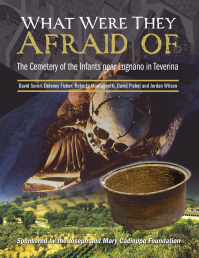
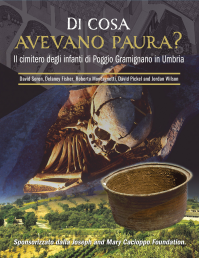
Di cosa avevano paura: La storia del cimitero infantile tardo romano di Poggio Gramignano - Lugnano in Teverina di David Soren, Delaney Fisher, Roberto Montagnetti e Jordan Wilson racconta dell'epidemia che si ritiene fosse malaria da Plasmodium falciparum, diffusasi probabilmente lungo il fiume Tevere intorno al 450 d.C., penetrata in quest’area a causa del commercio con il Nord Africa di beni come il vino trasportato attraverso grandi anfore. L'epidemia causò aborti spontanei, neonati nati morti e decessi di bambini, per un totale di circa 62 individui. Essa generò anche un'immensa paura tra la popolazione di questa comunità.

Gli infanti furono trovati con pietre conficcate nelle cavità orali e grandi pietre e altri materiali da costruzione posizionate su mani e piedi per impedire ai morti di risorgere e diventare revenant. Cuccioli di cane di circa 5-6 mesi furono anch'essi sacrificati, con uno addirittura tagliato in due, e associati alle sepolture dei bambini insieme ad altri reperti come: grandi calderoni di bronzo, una bambola d'osso senza braccia e gambe, resti di caprifoglio bruciato, un artiglio di corvo, parte di un portalucerne e altri oggetti.

Gli scavi, eseguiti essenzialmente sotto la direzione dei principali autori, iniziati nel 1987 con il Dr. Soren e tuttora in corso, hanno portato alla luce la più grande villa romana finora scoperta in Umbria, a nord di Roma e a sud di Siena. Sebbene la società tardo romana di quel periodo fosse presumibilmente già convertita al cristianesimo, gli scavi non hanno trovato alcuna testimonianza della professione di tale fede sul sito e si crede che, per far fronte alle misteriose morti che stavano flagellando la comunità, si fece ricorso a pratiche e culti precedenti, soprattutto l’utilizzo di talismani per scongiurare il male.

Sponsorizzato dalla Joseph and Mary Cacioppo Foundation.


David Soren

Dr. David Soren is a world renowned archaeologist who has been credited with making one of the top 75 discoveries in the history of world archaeology: finding the source of the Great Mediterranean Earthquake of A.D. 365 on the island of Cyprus and detailing the events that led to the rise of Christianity and the fall of Roman paganism on the island (Source: Oxford University Press).

He is a fellow of Great Britain's Royal Institute of International Affairs and of the Johns Hopkins School of Advanced International Studies as well as a Fellow of the American Academy in Rome, an honorary Italian citizen and the author of more than 25 books on archaeology and entertainment.

His archaeological excavations have discovered the lost sacred spings of the emperor Augustus in Tuscany and he has explained the decline of the Roman Empire in Italy through his discovery of a burial ground of infants believed to have died from a malaria epidemic in A.D. 450. Dr. Soren holds a B.A. in Greek and Roman Studies from Dartmouth College, an M.A. in Fine Arts from Harvard University and a Ph.D. in Classical Archaeology also from Harvard.

At the University of Arizona where he is Regents Professor of Classics and Anthropology, he regularly teaches as many as 1000 students per year. After finishing his most recent book on his new evidence that a pandemic stopped Attila the Hun from daring to attack Rome, he decided to turn to something different: an archaeologist looking at the life and art of Taylor Swift.

Converted to becoming a Swiftie by his own students, Dr. Soren became fascinated by how much students could learn from studying Taylor's lyrics and self-created videos and Eras Tour presentations and his new book invites Swifties to do a deeper dive and learn the implications of Swift's work in Surrealism and the Paranoiac-Critical Method, Steampunk Culture, Retro-Futurism, Art Deco, Expressionist-Cubism, Caligarism, Star Wars, Plato and Neo-Platonism, Aristotle's Poetics and numerous other topics and he has put all of this into his new book America's Superstar: A Deeper Dive.

Soren, who has designed and produced multi-million-dollar exhibitions for the American Museum of Natural History in New York City (and a Star Wars show coproduced with the film's original production designer Harry Lange at the Hayden Planetarium in New York), is a major fan of Swift's talents and in this textbook, written in clear non-jargony prose especially for Swifties, and featuring 180 illustrations and more than 300 online sources to consult for further deep diving, he shares why he finds Swift's work such a stepping stone to advanced intellectual engagement. 

Di cosa avevano paura: La storia del cimitero infantile tardo romano di Poggio Gramignano - Lugnano in Teverina di David Soren, Delaney Fisher, Roberto Montagnetti e Jordan Wilson racconta dell'epidemia che si ritiene fosse malaria da Plasmodium falciparum, diffusasi probabilmente lungo il fiume Tevere intorno al 450 d.C., penetrata in quest’area a causa del commercio con il Nord Africa di beni come il vino trasportato attraverso grandi anfore. L'epidemia causò aborti spontanei, neonati nati morti e decessi di bambini, per un totale di circa 62 individui. Essa generò anche un'immensa paura tra la popolazione di questa comunità.

Gli infanti furono trovati con pietre conficcate nelle cavità orali e grandi pietre e altri materiali da costruzione posizionate su mani e piedi per impedire ai morti di risorgere e diventare revenant. Cuccioli di cane di circa 5-6 mesi furono anch'essi sacrificati, con uno addirittura tagliato in due, e associati alle sepolture dei bambini insieme ad altri reperti come: grandi calderoni di bronzo, una bambola d'osso senza braccia e gambe, resti di caprifoglio bruciato, un artiglio di corvo, parte di un portalucerne e altri oggetti.

Gli scavi, eseguiti essenzialmente sotto la direzione dei principali autori, iniziati nel 1987 con il Dr. Soren e tuttora in corso, hanno portato alla luce la più grande villa romana finora scoperta in Umbria, a nord di Roma e a sud di Siena. Sebbene la società tardo romana di quel periodo fosse presumibilmente già convertita al cristianesimo, gli scavi non hanno trovato alcuna testimonianza della professione di tale fede sul sito e si crede che, per far fronte alle misteriose morti che stavano flagellando la comunità, si fece ricorso a pratiche e culti precedenti, soprattutto l’utilizzo di talismani per scongiurare il male.

Sponsorizzato dalla Joseph and Mary Cacioppo Foundation.


David Soren

Dr. David Soren is a world renowned archaeologist who has been credited with making one of the top 75 discoveries in the history of world archaeology: finding the source of the Great Mediterranean Earthquake of A.D. 365 on the island of Cyprus and detailing the events that led to the rise of Christianity and the fall of Roman paganism on the island (Source: Oxford University Press).

He is a fellow of Great Britain's Royal Institute of International Affairs and of the Johns Hopkins School of Advanced International Studies as well as a Fellow of the American Academy in Rome, an honorary Italian citizen and the author of more than 25 books on archaeology and entertainment.

His archaeological excavations have discovered the lost sacred spings of the emperor Augustus in Tuscany and he has explained the decline of the Roman Empire in Italy through his discovery of a burial ground of infants believed to have died from a malaria epidemic in A.D. 450. Dr. Soren holds a B.A. in Greek and Roman Studies from Dartmouth College, an M.A. in Fine Arts from Harvard University and a Ph.D. in Classical Archaeology also from Harvard.

At the University of Arizona where he is Regents Professor of Classics and Anthropology, he regularly teaches as many as 1000 students per year. After finishing his most recent book on his new evidence that a pandemic stopped Attila the Hun from daring to attack Rome, he decided to turn to something different: an archaeologist looking at the life and art of Taylor Swift.

Converted to becoming a Swiftie by his own students, Dr. Soren became fascinated by how much students could learn from studying Taylor's lyrics and self-created videos and Eras Tour presentations and his new book invites Swifties to do a deeper dive and learn the implications of Swift's work in Surrealism and the Paranoiac-Critical Method, Steampunk Culture, Retro-Futurism, Art Deco, Expressionist-Cubism, Caligarism, Star Wars, Plato and Neo-Platonism, Aristotle's Poetics and numerous other topics and he has put all of this into his new book America's Superstar: A Deeper Dive.

Soren, who has designed and produced multi-million-dollar exhibitions for the American Museum of Natural History in New York City (and a Star Wars show coproduced with the film's original production designer Harry Lange at the Hayden Planetarium in New York), is a major fan of Swift's talents and in this textbook, written in clear non-jargony prose especially for Swifties, and featuring 180 illustrations and more than 300 online sources to consult for further deep diving, he shares why he finds Swift's work such a stepping stone to advanced intellectual engagement. 
Other Titles from this Author(s)

Title: What Were They Afraid Of: The Cemetery of the Infants Near Lugnano in Treverina
soren italian cover
Title: Di cosa avevano paura? Il cimitero degli infanti di Poggio Gramignano in Umbria
Soren Cover
Title: America's Superstar: A Deeper Dive