Default Image

What Were They Afraid Of: The Cemetery of the Infants Near Lugnano in Treverina

Author(s)
David Soren
Edition
1
Pages
120
Book Type
Academic
Retail

CHOOSE YOUR FORMAT

Help Me Choose

Paperback Book

$19.99

ISBN: 9798385138852
Details: 
Print Product

eBook

$13.50

ISBN: 9798385138876
Details: 
Electronic Delivery EBOOK - 365 days

CHOOSE YOUR FORMAT

Help Me Choose

Paperback Book

$19.99

ISBN: 9798385138852
Details: 
Print Product

eBook

$13.50

ISBN: 9798385138876
Details: 
Electronic Delivery EBOOK - 365 days

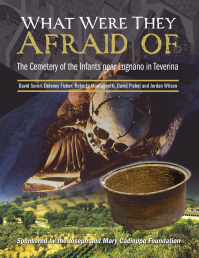
What Were They Afraid of: The Story of the Late Roman Infant Cemetery Near Lugnano in Teverina by David Soren, Roberto Montagnetti, David Pickel and Jordan Wilson, tells of the epidemic, believed to be Plasmodium falciparum malaria-which swept along the Tiber River valley in approximately 450 A.D., brought in by the trade with North Africa for such things as wine in large transport jars called amphorae. The epidemic produced aborted fetuses, stillborn neonates and deaths of children totaling some 58 in all. It also generated immense terror among the bewildered populace of this community.

Infants were found buried with stones wedged into their mouths and stones and large tiles placed over hands and feet in order to keep the dead from rising and becoming revenants. Puppies about 5 to 6 months of age were also sacrificed with one even being split in two, and also found associated with the infant burials were large bronze cauldrons, a bone doll that had been dismembered, burnt honeysuckle, a raven’s talon, part of a candelabrum and other items.

The excavations, under the principal investigation of the authors, began in 1987 with Dr. Soren and are ongoing, having unearthed the remains of the largest Roman villa yet discovered in Umbria, north of Rome and south of Siena. Even though late Roman society was allegedly under the sway of Christianity at this time, not a single Christian artifact has been found at the site from this period and it is believed that to cope with the mysterious deaths in the community the citizens revived earlier Roman practices, especially talismans to avert evil.


David Soren

Dr. David Soren is a world renowned archaeologist who has been credited with making one of the top 75 discoveries in the history of world archaeology: finding the source of the Great Mediterranean Earthquake of A.D. 365 on the island of Cyprus and detailing the events that led to the rise of Christianity and the fall of Roman paganism on the island (Source: Oxford University Press).

He is a fellow of Great Britain's Royal Institute of International Affairs and of the Johns Hopkins School of Advanced International Studies as well as a Fellow of the American Academy in Rome, an honorary Italian citizen and the author of more than 25 books on archaeology and entertainment.

His archaeological excavations have discovered the lost sacred spings of the emperor Augustus in Tuscany and he has explained the decline of the Roman Empire in Italy through his discovery of a burial ground of infants believed to have died from a malaria epidemic in A.D. 450. Dr. Soren holds a B.A. in Greek and Roman Studies from Dartmouth College, an M.A. in Fine Arts from Harvard University and a Ph.D. in Classical Archaeology also from Harvard.

At the University of Arizona where he is Regents Professor of Classics and Anthropology, he regularly teaches as many as 1000 students per year. After finishing his most recent book on his new evidence that a pandemic stopped Attila the Hun from daring to attack Rome, he decided to turn to something different: an archaeologist looking at the life and art of Taylor Swift.

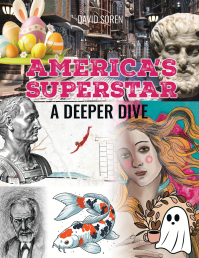
Converted to becoming a Swiftie by his own students, Dr. Soren became fascinated by how much students could learn from studying Taylor's lyrics and self-created videos and Eras Tour presentations and his new book invites Swifties to do a deeper dive and learn the implications of Swift's work in Surrealism and the Paranoiac-Critical Method, Steampunk Culture, Retro-Futurism, Art Deco, Expressionist-Cubism, Caligarism, Star Wars, Plato and Neo-Platonism, Aristotle's Poetics and numerous other topics and he has put all of this into his new book America's Superstar: A Deeper Dive.

Soren, who has designed and produced multi-million-dollar exhibitions for the American Museum of Natural History in New York City (and a Star Wars show coproduced with the film's original production designer Harry Lange at the Hayden Planetarium in New York), is a major fan of Swift's talents and in this textbook, written in clear non-jargony prose especially for Swifties, and featuring 180 illustrations and more than 300 online sources to consult for further deep diving, he shares why he finds Swift's work such a stepping stone to advanced intellectual engagement. 

What Were They Afraid of: The Story of the Late Roman Infant Cemetery Near Lugnano in Teverina by David Soren, Roberto Montagnetti, David Pickel and Jordan Wilson, tells of the epidemic, believed to be Plasmodium falciparum malaria-which swept along the Tiber River valley in approximately 450 A.D., brought in by the trade with North Africa for such things as wine in large transport jars called amphorae. The epidemic produced aborted fetuses, stillborn neonates and deaths of children totaling some 58 in all. It also generated immense terror among the bewildered populace of this community.

Infants were found buried with stones wedged into their mouths and stones and large tiles placed over hands and feet in order to keep the dead from rising and becoming revenants. Puppies about 5 to 6 months of age were also sacrificed with one even being split in two, and also found associated with the infant burials were large bronze cauldrons, a bone doll that had been dismembered, burnt honeysuckle, a raven’s talon, part of a candelabrum and other items.

The excavations, under the principal investigation of the authors, began in 1987 with Dr. Soren and are ongoing, having unearthed the remains of the largest Roman villa yet discovered in Umbria, north of Rome and south of Siena. Even though late Roman society was allegedly under the sway of Christianity at this time, not a single Christian artifact has been found at the site from this period and it is believed that to cope with the mysterious deaths in the community the citizens revived earlier Roman practices, especially talismans to avert evil.


David Soren

Dr. David Soren is a world renowned archaeologist who has been credited with making one of the top 75 discoveries in the history of world archaeology: finding the source of the Great Mediterranean Earthquake of A.D. 365 on the island of Cyprus and detailing the events that led to the rise of Christianity and the fall of Roman paganism on the island (Source: Oxford University Press).

He is a fellow of Great Britain's Royal Institute of International Affairs and of the Johns Hopkins School of Advanced International Studies as well as a Fellow of the American Academy in Rome, an honorary Italian citizen and the author of more than 25 books on archaeology and entertainment.

His archaeological excavations have discovered the lost sacred spings of the emperor Augustus in Tuscany and he has explained the decline of the Roman Empire in Italy through his discovery of a burial ground of infants believed to have died from a malaria epidemic in A.D. 450. Dr. Soren holds a B.A. in Greek and Roman Studies from Dartmouth College, an M.A. in Fine Arts from Harvard University and a Ph.D. in Classical Archaeology also from Harvard.

At the University of Arizona where he is Regents Professor of Classics and Anthropology, he regularly teaches as many as 1000 students per year. After finishing his most recent book on his new evidence that a pandemic stopped Attila the Hun from daring to attack Rome, he decided to turn to something different: an archaeologist looking at the life and art of Taylor Swift.

Converted to becoming a Swiftie by his own students, Dr. Soren became fascinated by how much students could learn from studying Taylor's lyrics and self-created videos and Eras Tour presentations and his new book invites Swifties to do a deeper dive and learn the implications of Swift's work in Surrealism and the Paranoiac-Critical Method, Steampunk Culture, Retro-Futurism, Art Deco, Expressionist-Cubism, Caligarism, Star Wars, Plato and Neo-Platonism, Aristotle's Poetics and numerous other topics and he has put all of this into his new book America's Superstar: A Deeper Dive.

Soren, who has designed and produced multi-million-dollar exhibitions for the American Museum of Natural History in New York City (and a Star Wars show coproduced with the film's original production designer Harry Lange at the Hayden Planetarium in New York), is a major fan of Swift's talents and in this textbook, written in clear non-jargony prose especially for Swifties, and featuring 180 illustrations and more than 300 online sources to consult for further deep diving, he shares why he finds Swift's work such a stepping stone to advanced intellectual engagement. 

Other Titles from this Author(s)

Title: What Were They Afraid Of: The Cemetery of the Infants Near Lugnano in Treverina
soren italian cover
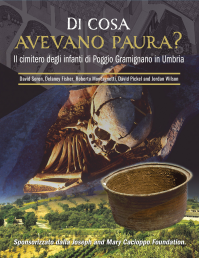
Title: Di cosa avevano paura? Il cimitero degli infanti di Poggio Gramignano in Umbria
Soren Cover
Title: America's Superstar: A Deeper Dive